
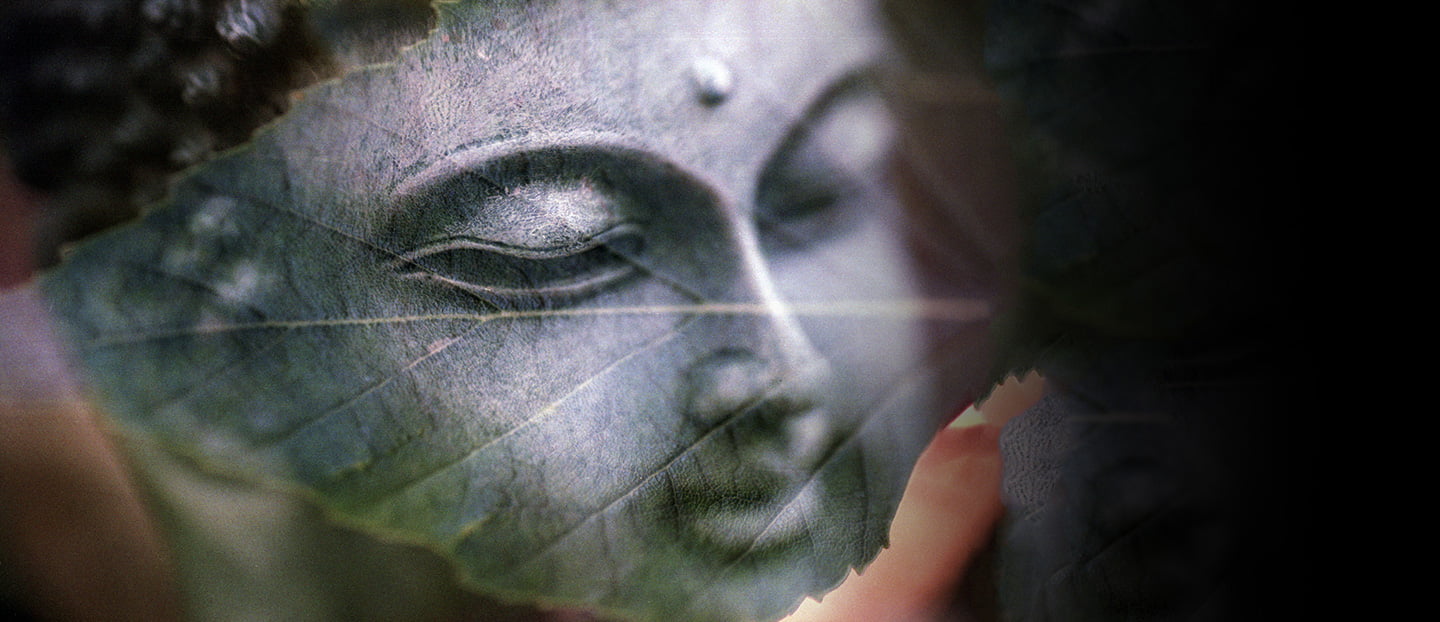
‘”Buddhi” in Sanskrit language means the “pure intellect’ the mind which is free from the conditioned influence of the emotions so that no biased or prejudiced observations or deductions are construed. The minds of most people operate under all kinds of biases and perversions so that all of their perceptions and thoughts are tainted and conditioned to function in set patterns. This way they can never perceive things in their true nature. The power and scope of their mind remains limited and confined. The Buddha, the Awakened One, was one who had freed his faculty of intellect from all distortions in order to clarify it to the greatest possible degree. From that point he was able to develop an acute awareness and insight into how the mind and body function together. As his insight deepened, he discerned the why and wherefore of the mind and body and all the phenomena related to them. Through his perfected insight the Buddha saw the complete cycle of cause and effect, the law of Karma as it pertains to the elements of mind and matter, and directly experienced how it operates.
He saw that the root cause of the suffering and unhappiness which living beings experience is rooted in their own mind. By cultivating awareness and acquiring control over the operation of the mind, a person could alter, eliminate, and destroy those root causes which bring misery, sorrow, and frustration in his life. He could create and develop other root causes which would bring about the gradual and eventual ending of all sorrow and confusion. He would then be free from all doubts, regrets, remorse, anxiety, and restlessness which would disturb his well-being; he would be an inspiration for others and be able to help them effectively.
That is exactly the teaching and practice which the Buddha first discovered for himself and then, out of great compassion, explained and methodically offered to the world. The Buddha was the great doctor of the mind who cured his own mind of the great disease-ego/conceit. He was also able to expound and describe in detail the cure by which any person could likewise purge his mind of the great affliction called “Ego,'” and of all of the attendant sorrow, pain, and grief which inevitably accompanies such a disease. So an appropriate title for those teachings which are called Buddhism could well be termed ‘The Way to Peace and Happiness.”
The Buddha was born the son of a king and queen, and he grew up among all the pleasures and luxuries of a royal court, but he abandoned them all in order to seek the Noble Quest as described by him in the ‘Ariyapariyesanasutta’ as follows;
Addressing monks he said “These are the two quests: the noble quest and the ignoble quest.
And what is the ignoble quest? Someone himself being liable to birth, aging, decay, dying, sorrow and stain, he seeks what is likewise liable to birth, aging . . . stain.
And what, monks, would you say is liable to birth, aging, decay, dying, sorrow and stain? Sons and wives monks, are liable to these conditions. Women-slaves, men-slaves, goats, sheep, cocks, swine, cows, elephants, horses, gold and silver are liable to these conditions; yet this man, being enslaved, infatuated, addicted, himself being liable to birth, aging . . . stain; he seeks happiness in what is likewise liable to these conditions.
And what, monks, is the noble quest? As to this, someone himself being liable to birth, aging . . . stain, but having seen the peril in what is likewise liable to these things, he seeks the Unborn, the Undying, the uttermost security from the bonds – Nibbana. This
monks, is the noble quest.
And I too monks, before my “Awakening”, while yet unenlightened, being myself liable to birth, aging, decay, dying, sorrow and stain, I also sought happiness in what was likewise liable to those conditions.
Then it occurred to me: Why do I, being liable to birth, aging, stain, myself seek what is likewise liable to these conditions? Oppose that I … having seen the peril in what is likewise liable to birth . . should seek the Unborn, Undying, the uttermost security from the bonds-Nibbana.
Then I, monks, being a seeker of what is good, searching for the incomparable, matchless path to peace, walking on tour through Magadha, in due course arrived at Uravela, the camp township. There I saw a delightful stretch of land and a lovely woodland grove. and a clear flowing river with a delightful ford, a village for support nearby. It occurred to me, monks, “Indeed, it is a delightful stretch of land. . . indeed this does well for the striving of a young man set on striving.” So I, monks, sat down just there, thinking: “Indeed this does well for striving.”
So I, monks, being myself liable to birth, aging, decay, disease, dying, sorrow, and stain, having seen the peril in what is likewise liable to the same, sought the Unborn, Undying—Nibbana Knowledge and vision arose in me: “Unshakable is freedom for me, this is the last birth, there is no more again becoming!”